The Best Protection Dogs, Ranked by What Actually Matters at Home
Thirteen breeds, scored on the six things that decide whether a guardian actually works in a household. Editorial scores, published weights, no sales links and no invented reviews.
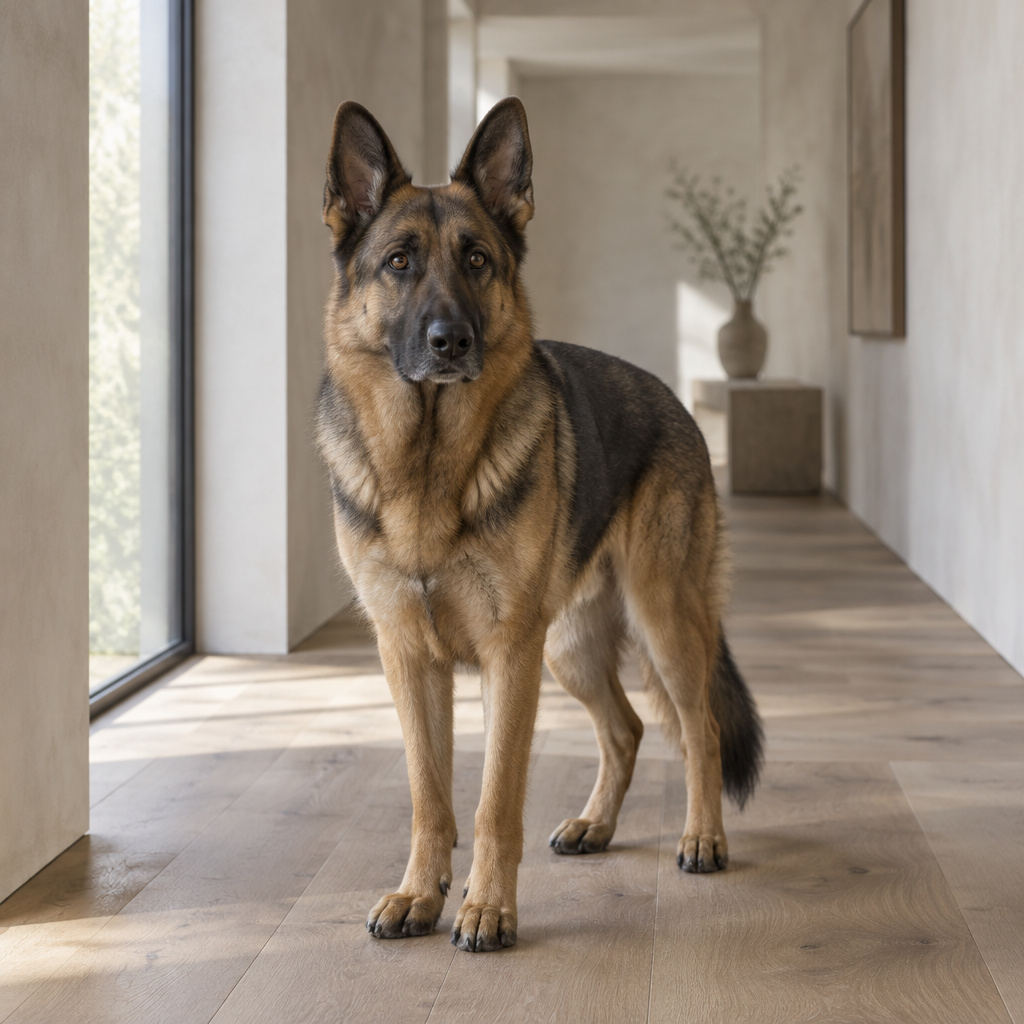

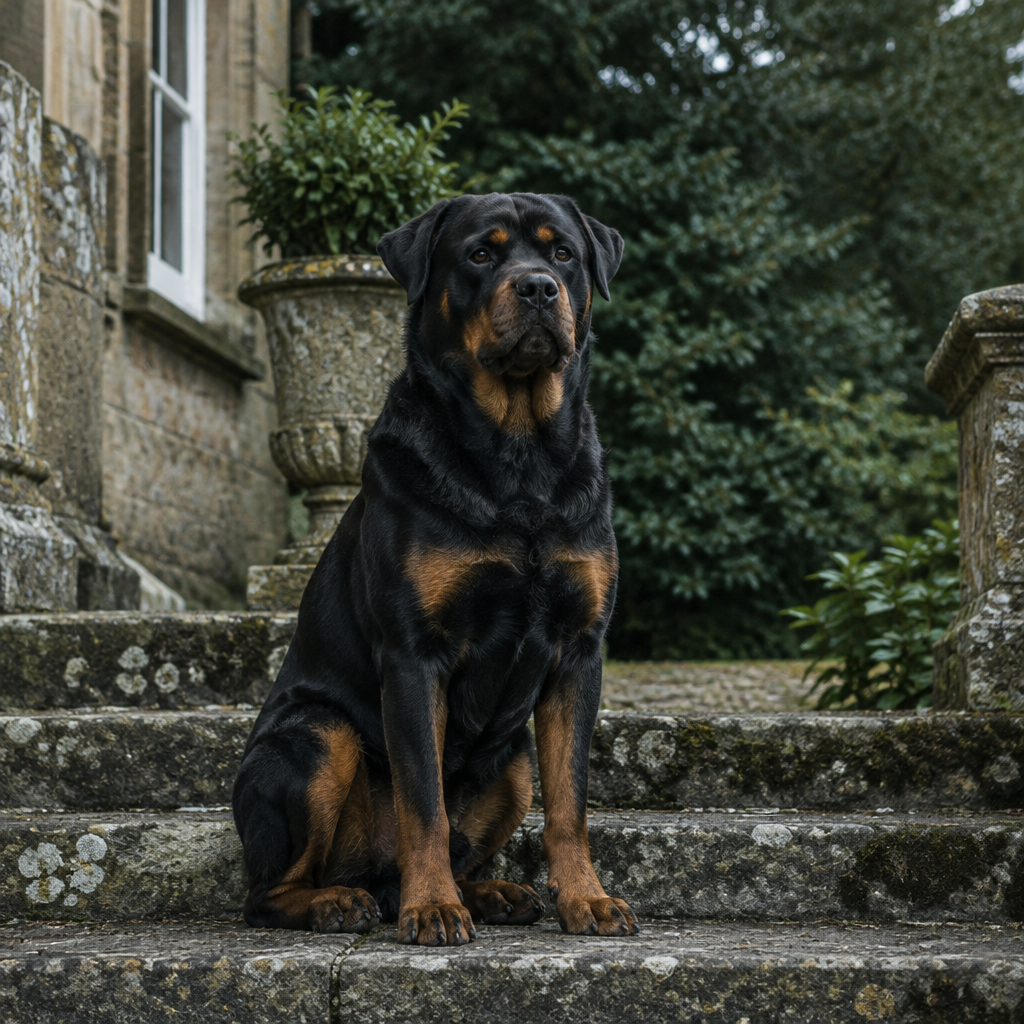
The ranking
Top five at a glance
Every score is editorial and every criterion is published. Read the table, note the reasons you disagree with, then check the verdicts.
| Breed | Best for | Energy | Size | Score |
|---|---|---|---|---|
| 01German Shepherd Dog | Best overall | High | Large55–90 lb | 7.9 |
| 02Rottweiler | Best for confident families | Moderate | Very large80–135 lb | 7.6 |
| 03Bouvier des Flandres | Best all-rounder | Moderate to high | Large70–110 lb | 7.4 |
| 04Doberman Pinscher | Best for a single focused handler | High | Large60–100 lb | 7.3 |
| 05Giant Schnauzer | Best for experienced owners | High | Large55–95 lb | 7.2 |
Best by use case
The best dog depends on the house, not the breed chart
A ranking is only useful once it meets your circumstances. Six shortlists, each with the reasons a breed made it and the ones we think you should avoid.
01
Best for families
Patience, recovery time, and the breeds that tolerate a full house.
02
Best for first-time owners
The breeds whose beginner mistakes are survivable, and the ones that are not.
03
Best for estates
Dogs that hold a perimeter in weather, without you standing next to them.
04
Best for smaller homes
Three that work in a townhouse, four that honestly do not.
05
Best for women living alone
Ranked on single-handler control and alertness, not on size.
06
Best by budget
Four cost tiers, what drives them, and what we will not guess at.
How we rank
Six criteria, published weights, one number you can argue with
Family fit carries as much weight as trainability, because a dog that cannot live in the house does not protect it. Deterrence carries only ten per cent, because every breed on this list already deters, and the differences between them are small compared with the differences in how they live.
Each breed is scored out of ten on each criterion, and the headline score is the weighted average. The rubric, the reasons we exclude prices, and our update policy are all published.
- Temperament stability25 %
- Trainability20 %
- Family fit20 %
- Health & lifespan15 %
- Deterrence10 %
- Manageability10 %
Weighted to 100. Scores are editorial and are not customer reviews, sales data or breeder claims.
Top three in full
The three we would actually recommend first
Strengths, watch-outs and a verdict for each. Where we think a breed is oversold, the watch-outs say so.
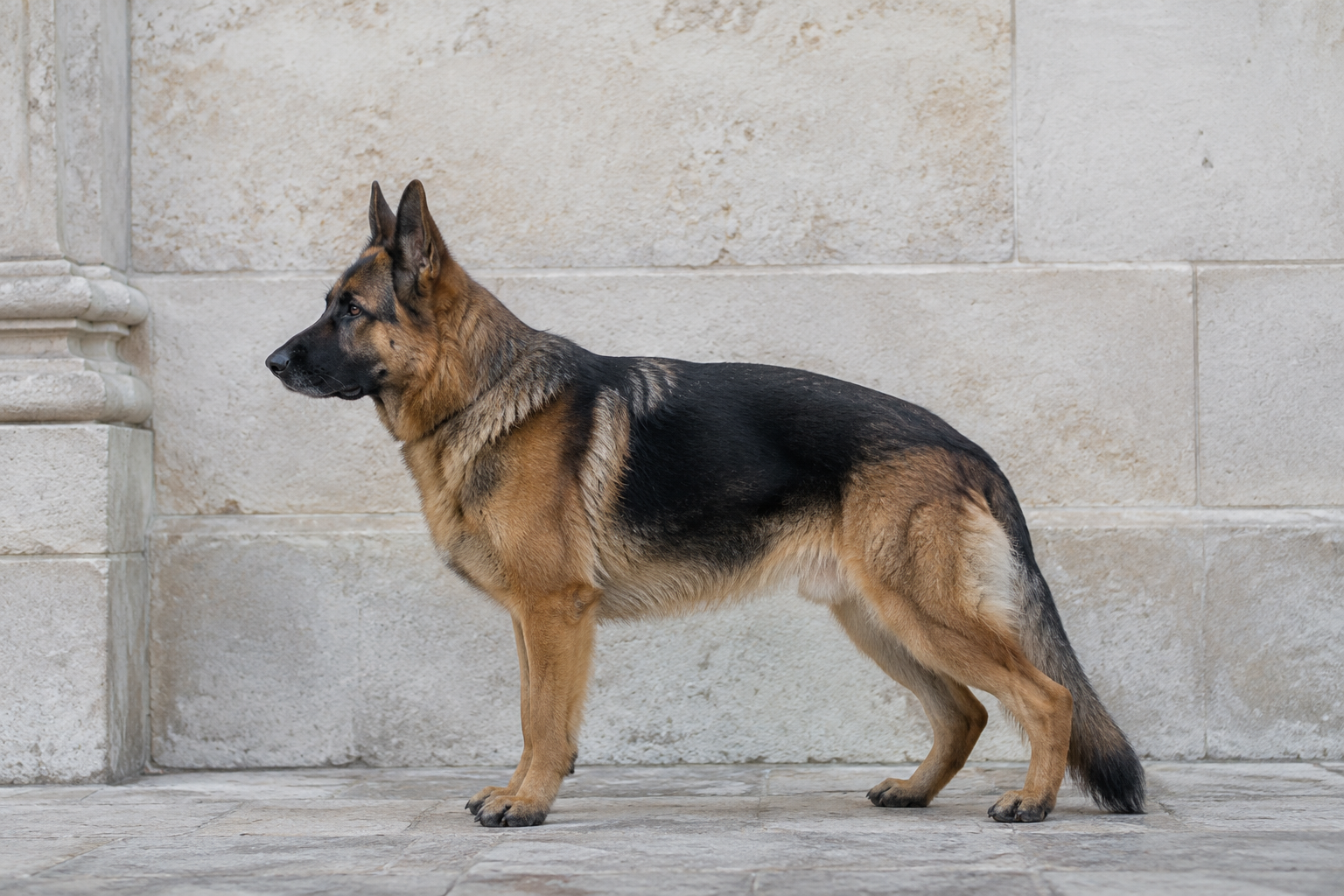
The breed that loses the least when a household gets the details wrong.
- Size
- 55–90 lb
- Energy
- High
- Lifespan
- 9–11 years
- Coat
- Double coat, two heavy sheds a year
score
Strengths
- Forgiving of an inconsistent first year. A shepherd from pet or show lines is still a workable dog at three, which is not true of a Malinois or a Corso.
- Deterrence that switches on without training: the bark, the silhouette at the gate, the habit of checking the perimeter on its own.
- The deepest supply of health-tested, temperament-tested litters of any protection breed, so what you are buying can actually be verified before you pay.
Watch-outs
- Hip and elbow dysplasia, degenerative myelopathy and bloat are common enough that buying without documented screening is a financial risk, not a technicality.
- Two heavy sheds a year, daily brushing in between, and a vacuum that earns its keep.
- Nervy, undersocialised shepherds are the breed's worst reputation and they are everywhere. A dog that barks at nothing is a badly bred shepherd, not a typical one.
The verdict
Best overallIf you want one dog to be deterrent, companion and trainable partner, and you will commit to a weekly class for two years and an hour of walking a day, this is the ranking's default answer. It is first not because it wins any single column, because it doesn't, but because no other breed here has a floor as high: nothing under six, on every criterion.

A calm dog with weight behind it, if you can accept the lifespan.
- Size
- 80–135 lb
- Energy
- Moderate
- Lifespan
- 8–10 years
- Coat
- Short, seasonal shed
score
Strengths
- Holds ground instead of chasing. The breed's instinct is to put itself between its family and a threat and stay there, which suits a house with a yard and a routine.
- Unusually patient with family chaos it was raised inside. The physical steadiness that makes it a poor sports dog makes it a good family dog.
- Maximum deterrence with zero training. A Rottweiler at the gate ends most conversations before they begin.
Watch-outs
- The shortest health span in the top five. Cancer and orthopaedic disease are common, and you should plan for a dog that may leave you at eight.
- An adult is 100 lb and up. Loose-lead walking is a safety requirement rather than a training preference, and an adolescent is not a beginner's project.
- Breed-specific legislation and insurer exclusions are real. Check your municipality and your homeowner policy before you choose a litter.
The verdict
Best for confident familiesThe best family guardian here for people who want a settled dog rather than a driven one, and who can carry the health risk. It gains on deterrence and family fit and gives most of it back on lifespan and manageability, which is why it sits second rather than first.
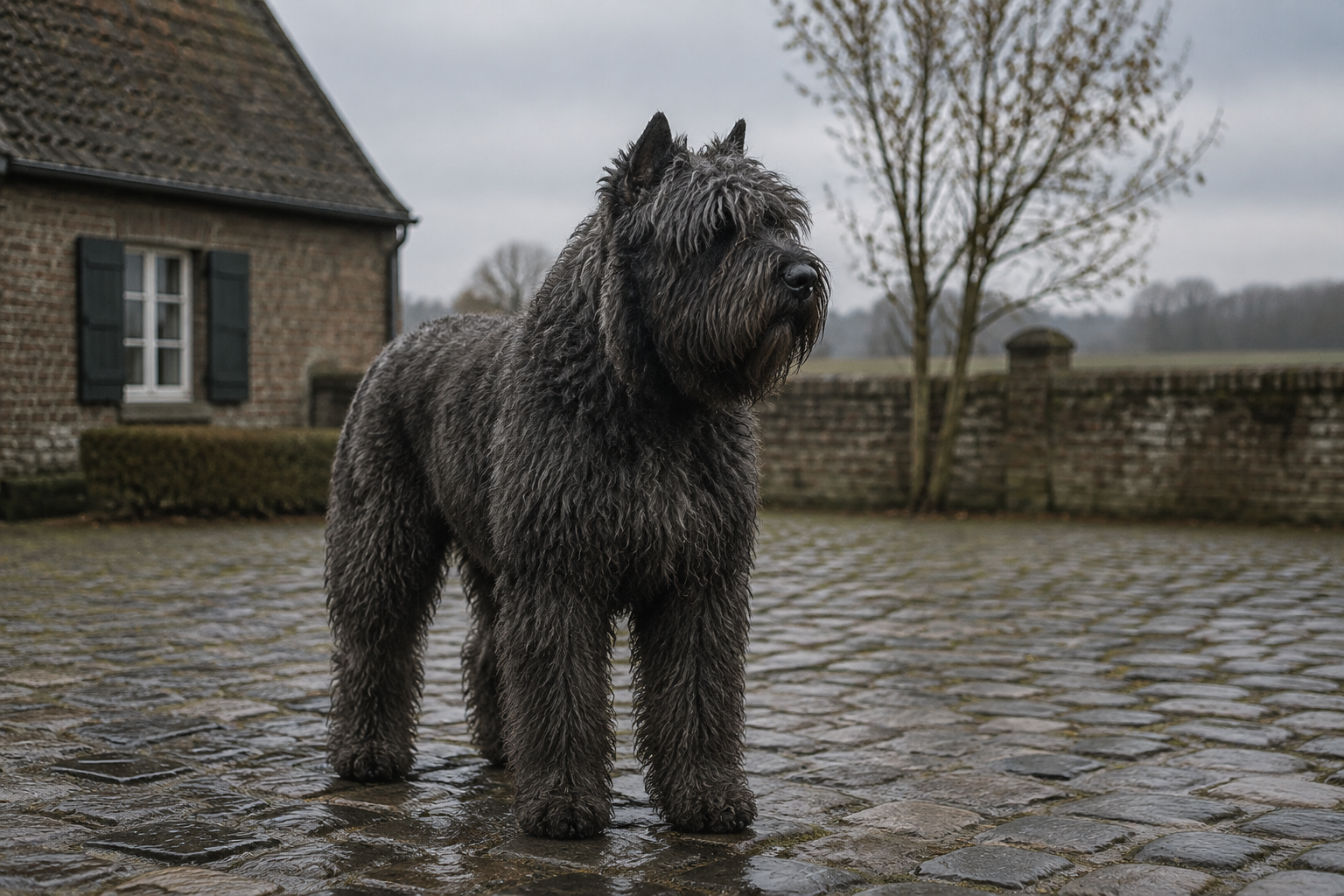
No column below six, and the calmest large guardian on the list.
- Size
- 70–110 lb
- Energy
- Moderate to high
- Lifespan
- 10–12 years
- Coat
- Rough double coat, weekly brush, professional trim 3–4 times a year
score
Strengths
- Even-tempered and slow to react. The Bouvier watches, decides, then acts, which is why it is calmer than a shepherd in a busy house.
- Weatherproof and physical. Bred to work all day in wet cold, which is why it holds up on acreage better than short-coated breeds.
- A genuine off switch indoors. It will lie at your feet for four hours and then work a full day.
Watch-outs
- Grooming is a weekly commitment and a professional trim three or four times a year. The coat is not optional maintenance.
- A rare breed with a handful of litters a year in the US. Expect a wait, a deposit and some travel.
- Independent streak: a Bouvier will ask why. Handlers who need instant compliance read that as stubbornness; it is really just a slower agreement.
The verdict
Best all-rounderThird, and the ranking's quietest recommendation. It has no elite column, but it is the only breed here with an eight or better on temperament, trainability and family fit at once, which is exactly the profile of a dog that stops being a project after the second year.
Editorial article · 6 minute read
Which protection dog fits your life?
Three questions, our published weights, and a shortlist you can argue with. It is an article with a quiz inside it, not a lead form: no email required, nothing saved, and we tell you when the honest answer is no dog.
Head to head
Latest comparisons
Two breeds, six criteria, and an honest answer about which reader should pick which.
Comparison
Belgian MalinoisvsGerman Shepherd Dog
On paper the Malinois wins on trainability and deterrence and the shepherd wins on family fit and manageability. Which one you should own is decided almost entirely by how many hours a week you will actually train.
7.1 / 7.9
Comparison
German Shepherd DogvsDoberman Pinscher
The narrowest comparison on the site: 7.9 against 7.2, decided by a five-point gap in the health column. If the Doberman’s cardiac risk were solved, this would be close to a coin toss.
7.9 / 7.3
Comparison
Belgian MalinoisvsDoberman Pinscher
The two most trainable breeds in the table, separated by a point and a half. The Malinois is healthier and more driven; the Doberman is closer-bonded and more easily overwhelmed.
7.1 / 7.3
Questions
What readers ask before they shortlist
How is the editorial score worked out?
Six weighted criteria: temperament stability (25%), trainability (20%), family fit (20%), health and lifespan (15%), deterrence (10%) and manageability (10%). Each breed is scored out of ten on each criterion, and the score you see is the weighted average. The full rubric, including what a six means and what a nine means, is published on our methodology page.
Do you sell dogs or take money from breeders?
No. We do not sell, place or broker dogs, and we do not run a directory of breeders. No breeder pays for a position, a badge or a score. If we ever accept commercial revenue it will be labelled on the page it appears on, and it will not affect a ranking.
Why is the Belgian Malinois not number one?
Because it scores five on family fit and four on manageability, and those two criteria together carry thirty per cent of the score. The Malinois is the most capable dog in the table and the one we recommend to the fewest readers: it needs structured daily work, and most households do not provide it. A ranking that put it first would be ranking capability rather than fit.
Which breed is best for a first-time owner?
The German Shepherd, if it has to be a puppy, and a professionally trained adult of almost any breed on this site if it does not. A two-year-old dog with a known history removes the largest variable you cannot control, which is what the dog learned before you met it.
Are these scores the same as customer reviews?
No, and they are not intended to be. We publish no customer reviews, no star ratings and no sales figures. Every score is editorial: it comes from breed standards, published health and longevity data, and the professional training literature. You can disagree with a score, and the methodology lets you say exactly which criterion you disagree with.
How often are the rankings updated?
Every ranking page is reviewed at least twice a year, and any page can be revised sooner if a significant health study, breed-club survey or regulatory change lands. Each ranking carries a last-updated date, and corrections are logged on our about page.
The update list
Told when a score changes, not when a breeder has a litter
Rankings are reviewed twice a year and revised when a health study or a regulation changes the picture. This list exists so you hear about that, and nothing else.
A short note when a ranking changes. No breeder offers, no sales email, one click to leave.